

Pista Barfi made the smallest ask of Shark Tank India Season 5’s opening stretch — ₹30 lakh — and came away with nothing. For a traditional Indian sweets brand competing in a market worth many thousands of crores, the rejection says a great deal about how investors view heritage food businesses.
- What is Pista Barfi?
- The pitch: Rs 30 lakh for 5% equity
- The outcome: no deal
- Why traditional sweets are hard to scale
- Shelf life is the binding constraint
- The category is intensely local
- Seasonality concentrates the year
- The unorganised sector sets the price
- What founders should take away
- Frequently Asked Questions
- Did Pista Barfi get a deal on Shark Tank India Season 5?
- What valuation did Pista Barfi ask for?
- What does Pista Barfi sell?
- Why did the Sharks reject Pista Barfi?
- The bottom line
What is Pista Barfi?
Pista Barfi is a traditional sweets brand operating in the Indian mithai category — the pistachio-based barfi that sits at the premium end of the traditional confectionery shelf.
The market opportunity is genuinely enormous. Indian sweets are bought for festivals, weddings, religious occasions, corporate gifting and daily consumption. Diwali alone drives extraordinary volume. Almost all of it, however, flows through a highly fragmented network of local halwais and regional chains rather than through national brands.
The pitch: Rs 30 lakh for 5% equity
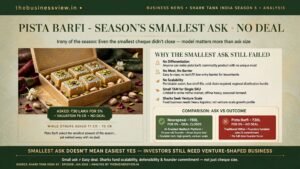
Pista Barfi asked for ₹30 lakh for 5% equity, valuing the business at ₹6 crore.
This was the most modest valuation of the entire early season. For context:
| Brand | Valuation asked | Outcome |
|---|---|---|
| Kalam Labs | ~₹298 crore | Deal |
| Smylo | ₹68 crore | Deal above ask |
| Corel Lifecare | ₹60 crore | Deal |
| Pista Barfi | ₹6 crore | No deal |
The outcome: no deal
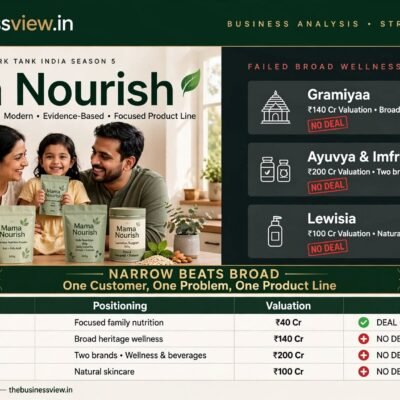
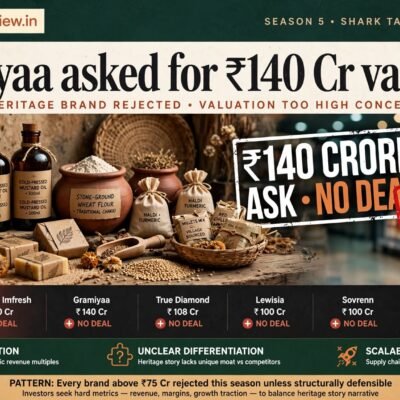
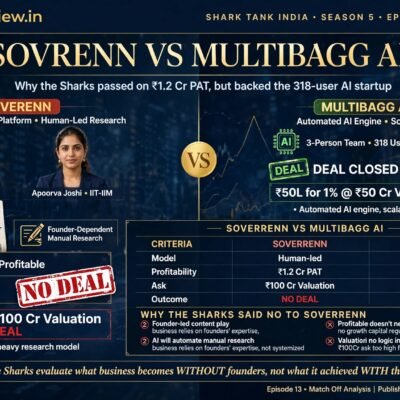
By Episode 7, this had become the season’s most consistent pattern. The smallest asks were failing while the largest ones were closing. Guugly Wuugly at ₹10 crore, Panteazy at ₹10 crore, Planyt at ₹16 crore — and now Pista Barfi at ₹6 crore. All rejected. Meanwhile ₹100 crore and ₹298 crore asks were converting.
The reason is not that Sharks prefer expensive companies. It is that investors are underwriting an outcome, not an entry price. A small cheque still has to return a meaningful multiple to justify the time it consumes. If the business cannot plausibly become large, a low valuation does not make it investable — it just makes it cheap.
Why traditional sweets are hard to scale
Shelf life is the binding constraint
Fresh mithai lasts days, not months. That rules out national distribution through conventional retail, e-commerce logistics and warehousing. Extending shelf life usually means preservatives or format changes, which compromise the authenticity that justified the premium in the first place.
The category is intensely local
Sweet preferences vary sharply by region, and consumers are fiercely loyal to specific shops — often the same one their family has used for decades. A brand that wins in one city has to rebuild trust from zero in the next.
Seasonality concentrates the year
A disproportionate share of revenue arrives around Diwali, Raksha Bandhan and the wedding season. Capacity has to be built for peaks and sits idle in between, which is punishing for fixed costs and working capital.
The unorganised sector sets the price
Local halwais operate with negligible overheads and no branding costs. A packaged brand carrying marketing, distribution and compliance expenses has to justify a premium against a product the customer already trusts.
What founders should take away
- Asking small does not reduce your risk in an investor’s eyes. It often signals limited ambition or an unclear path to scale.
- Solve the structural constraint before you pitch. In perishable food, the pitch has to lead with shelf life, distribution and capacity — not with taste.
- A large market is not an addressable market. The Indian sweets industry is vast, but almost none of it is reachable by a young packaged brand without a specific mechanism to reach it.
Frequently Asked Questions
Did Pista Barfi get a deal on Shark Tank India Season 5?
No. Pista Barfi asked for ₹30 lakh for 5% equity in Episode 7 and did not receive an offer.
What valuation did Pista Barfi ask for?
₹30 lakh for 5% equity implies a ₹6 crore valuation — the lowest of the season’s opening episodes.
What does Pista Barfi sell?
Traditional Indian sweets, centred on pistachio barfi.
Why did the Sharks reject Pista Barfi?
Traditional sweets face structural scaling barriers — short shelf life, regional taste variation, heavy seasonality and competition from unorganised local sellers — which make a national brand difficult to build.
The bottom line
Pista Barfi asked for less money than any other brand in its part of the season and was turned down while businesses asking fifty times more closed deals. That is the clearest statement Season 5 made about what the Sharks were actually buying: not a bargain, but a plausible route to something large.