

Stroom pitched a protein bar brand on Shark Tank India Season 5 and closed a deal at close to its asking price — a rare outcome in a season defined by heavy valuation cuts. In one of India’s most brutally competitive consumer categories, that is a result worth examining.
- What is Stroom?
- The pitch: Rs 1 crore for 2% equity
- The deal: Rs 1 crore for 2.5% plus 2% advisory equity
- Why a modest ask produced better terms
- A defensible number does not need defending
- The pattern held across the season
- Advisory equity signals engagement
- What founders should take away
- Frequently Asked Questions
- Did Stroom get a deal on Shark Tank India Season 5?
- What valuation did Stroom get?
- What does Stroom sell?
- What is advisory equity in a Shark Tank deal?
- The bottom line

What is Stroom?
Stroom is a protein bar brand, operating in the ready-to-eat protein snacking segment that has expanded rapidly as Indian consumers have become more protein-aware.
The demand shift behind it is real. Protein has moved from a bodybuilding concern to a mainstream nutritional priority, gym membership has grown across tier-1 and tier-2 cities, and consumers increasingly read macronutrient labels. The protein bar sits at the convenient end of that trend — a snack that carries a functional claim.
It is also one of the most crowded shelves in Indian D2C. Dozens of brands compete, along with imported products and the protein powder and shake categories that solve a similar need at lower cost per gram.
The pitch: Rs 1 crore for 2% equity
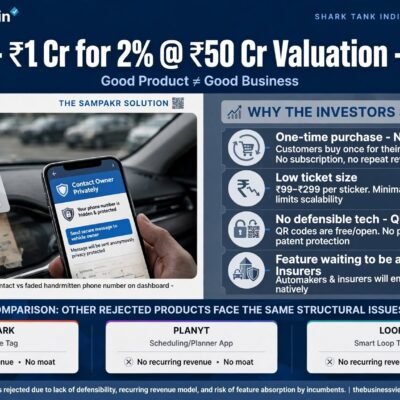
Stroom asked for ₹1 crore for 2% equity, valuing the business at ₹50 crore.
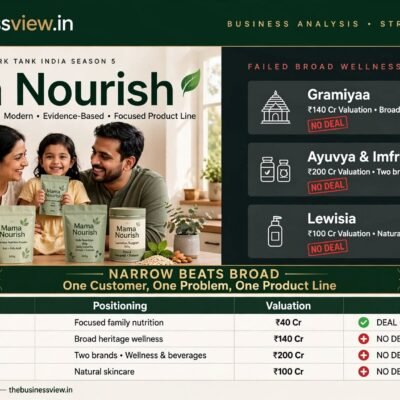
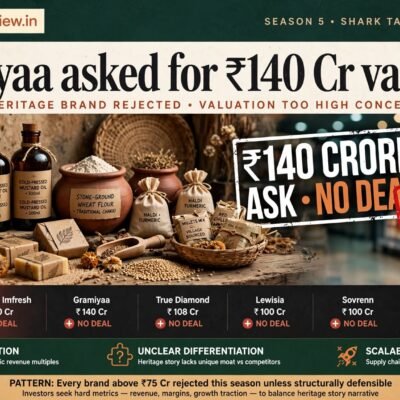
Note the discipline in that number. Season 5’s opening episodes were full of ₹1 crore for 1% asks implying ₹100 crore valuations, and almost all of them were cut hard or rejected. Stroom asked at half that.
The deal: Rs 1 crore for 2.5% plus 2% advisory equity
Stroom closed at ₹1 crore for 2.5% equity plus 2% advisory equity — a valuation of ₹40 crore on the cash component.
| Ask | Deal | |
|---|---|---|
| Capital | ₹1 crore | ₹1 crore |
| Equity for cash | 2% | 2.5% |
| Advisory equity | — | 2% |
| Valuation | ₹50 crore | ₹40 crore |
A 20% valuation cut — one of the gentlest of the season. Compare it with Capture A Trip at 70%, Nootie at 70% plus a royalty, and Corel Lifecare at 75%. Stroom kept nearly all of its price.
Why a modest ask produced better terms
A defensible number does not need defending
When a valuation is already close to what an investor would independently arrive at, the negotiation is short. Founders who anchor at two or three times a defensible figure spend the entire pitch justifying the anchor instead of explaining the business — and usually lose the argument anyway.
The pattern held across the season
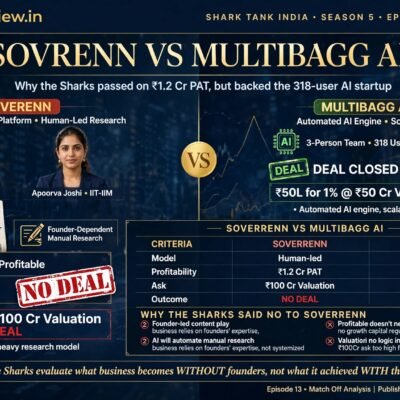
Season 5 produced a consistent relationship between asking realistically and closing well. Smylo asked at ₹68 crore and got ₹75 crore. Stroom asked at ₹50 crore and got ₹40 crore. EMoMee asked at ₹50 crore and kept it entirely. Meanwhile the ₹75 crore-plus consumer asks were being rejected outright.
Advisory equity signals engagement
The 2% advisory component is the same structure Smylo accepted. In an oversupplied category like protein bars, the difference between brands is rarely the product — it is retail listings, quick-commerce placement and gym and distributor relationships. Those are network problems, and an engaged investor moves them faster than an extra crore of marketing spend.
What founders should take away
- Price yourself where the conversation can start, not where it has to be dragged from. A 20% cut on a realistic ask beats a 70% cut on an inflated one.
- In crowded categories, distribution is the whole game. Product quality is table stakes when thirty brands claim the same thing. Shelf access decides who survives.
- Understand what you are paying for. Stroom gave up 4.5% in total. If the advisory 2% unlocks retail and quick-commerce placement, it is cheap. If it does not, it is expensive. Tie it to commitments.
Frequently Asked Questions
Did Stroom get a deal on Shark Tank India Season 5?
Yes. Stroom closed ₹1 crore for 2.5% equity plus 2% advisory equity.
What valuation did Stroom get?
₹40 crore on the cash component, against a ₹50 crore ask — a 20% cut.
What does Stroom sell?
Stroom is a protein bar brand in the ready-to-eat protein snacking category.
What is advisory equity in a Shark Tank deal?
Equity given to an investor for mentorship, time and network access rather than for cash — a structure that appeared in several Season 5 deals including Smylo’s.
The bottom line
Stroom is in one of the hardest consumer categories in India and still walked out with nearly its full valuation and the full cheque. It did not do that with a better story than the brands that got cut in half. It did it by walking in with a number the Sharks could already accept.